Las Vegas
Handyman Co.
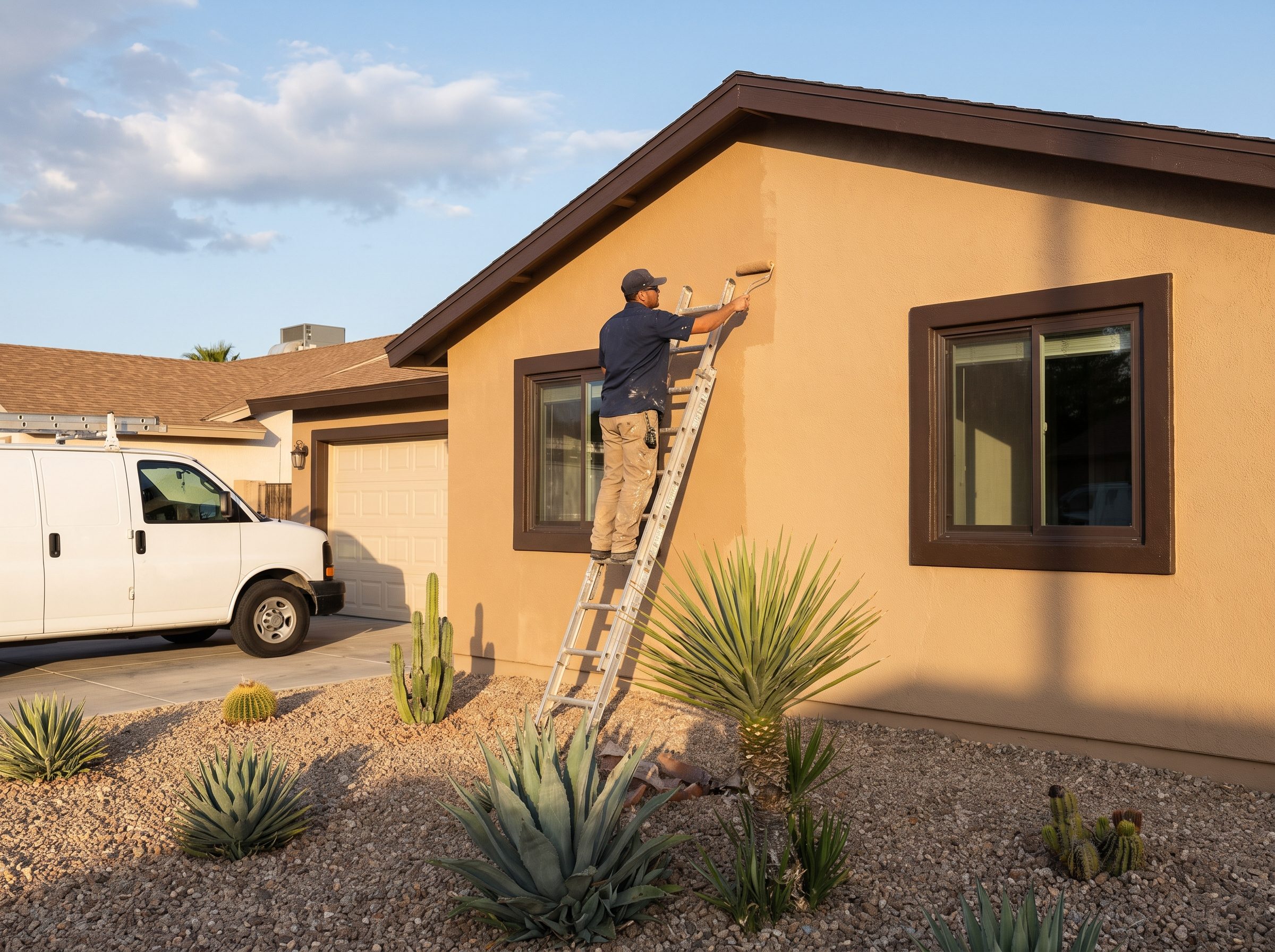
Painter on a ladder rolling fresh paint onto the stucco wall of a single-story Las Vegas home with desert landscaping and clouds building overhead
All guides

Monsoon prep for Las Vegas homes: what to check before storms

June 2, 2026 / 5 min read

When is monsoon season in Las Vegas?

Monsoon home prep in Las Vegas starts with knowing the calendar. The National Weather Service in Las Vegas counts monsoon season as June 15 through September 30, and Clark County names July through September as flash flood season. In practice, that means getting the house ready by the end of June.

Storms here are short and uneven. One neighborhood can get a downpour while another a few miles away stays dry, and some summers bring very little rain at all. When a storm does hit, it can bring heavy rain in a short burst, strong gusty wind, blowing dust and lightning, and flooding can happen quickly, even on streets that looked dry an hour earlier.

A house built for dry heat is not always ready for that. Caulk dried out by summer sun, a roof drain packed with debris or a yard that slopes toward the slab can turn one storm into a ceiling stain or wet carpet.

Roof, gutters and roof drains

Start with what you can see from the ground. Look for cracked, slipped or missing roof tiles or shingles, and flashing that has lifted around vents and where walls meet the roof. Binoculars help. Walking on a tile roof can crack tiles that were fine, so leave climbing to a roofer.

Flat roof sections and patio covers often drain through scuppers (openings in the parapet wall) or roof drains. Wind blows leaves, palm debris and trash into them all year, and a blocked scupper lets water pond until it finds a seam. If the house has gutters, clear them and make sure the downspouts empty away from the foundation, not against the wall.

Clark County's flood safety guidance lists clearing out drains and gutters among its steps for protecting a home, and it is also one of the cheapest.

Caulk, stucco cracks, windows and doors

Wind-driven rain finds the gaps that summer sun opened. Walk the outside of the house and check the caulk around windows, doors, hose bibs, light fixtures, and anywhere pipes or wires go through the stucco. Caulk that is cracked, hard or pulling away should be cut out and replaced with an exterior sealant rated for the surface, not smeared over.

Hairline cracks in stucco are common and mostly cosmetic, but rain can work into them. Filling and sealing them before storms, or as part of exterior painting, keeps water from getting behind the finish. Wider cracks, cracks that keep growing or stucco that sounds hollow when tapped deserve a closer look.

Most sliding doors and many windows have small weep holes along the bottom of the frame that let water drain back out. Dust and grit clog them, and then rain collects in the track and can spill inside. Vacuum the tracks and clear the weep holes with a pipe cleaner or thin wire. Finish with the entry doors: worn weatherstripping and a torn door sweep let in rain, dust and hot air.

Grading, yard drains and block walls

Most homes in the valley sit on a concrete slab at ground level, so where water goes after it hits the ground matters. Soil and gravel next to the house should slope away from the foundation. Over the years, landscaping, pavers and rock beds can build up against the wall until water runs toward the slab instead of away from it.

Walk the yard and look at every drain grate, channel and opening. Patio drains and yard drains fill with gravel, leaves and dust, and a blocked one turns a patio into a pond. If your block wall has small drainage openings at the base, keep them clear of rock and debris so water does not back up against the wall or the house.

Wind is the other half of a monsoon storm. Secure or store patio umbrellas, cushions, trampolines and lightweight furniture, and have dead palm fronds and weak tree limbs trimmed before they end up on the roof or a neighbor's car. Check the garage door bottom seal too, since a torn seal lets wind-driven water and dust under the door.

Outdoor outlets, the AC unit and power

Outdoor outlets should have GFCI protection and a weatherproof in-use cover, the bubble style that stays closed with a cord plugged in. Covers crack in the sun, and a wet outlet can trip its GFCI or corrode over time. Press the test and reset buttons on each outdoor GFCI before the season, and replace any cover that no longer closes.

Dust storms can clog the fins on the outdoor AC unit and load the indoor filter fast. After a big blow, check the filter. With the power to the unit off, a gentle rinse from a garden hose clears dust from the condenser fins; the manual covers the details. Lightning and power flickers are hard on electronics, so plug computers and TVs into surge protectors and unplug what you can when a storm is overhead.

Keep a flashlight and a charged phone battery handy, and know where your main water shut-off and electrical panel are before you need them in the dark.

After the storm: signs of water getting in

Once a storm passes, take ten minutes to look around. Inside, check ceilings below the roofline and near the AC unit, window sills, the base of exterior walls and the garage floor along the door. Water stains, bubbling paint, soft drywall and a musty smell are all signs that water got in somewhere.

Take dated photos before cleaning anything up, then find and fix the source first. Patching drywall over a leak that is still active only hides the problem. Once the leak is stopped, wet drywall needs to dry out or be cut out, depending on how soft it is.

Outside, stay out of washes, channels and detention basins during and after storms. The Clark County Regional Flood Control District warns that six inches of water can make a driver lose control of a vehicle and one foot can float most cars. If a street is flooded, turn around.

What to do yourself and when to call for help

Clearing drains, vacuuming door tracks, testing GFCIs and tying down patio furniture are all homeowner jobs. Roof repairs belong with a roofer. The work in between, such as recaulking windows and doors on a two-story house, sealing stucco cracks, replacing a cracked outlet cover, or repairing drywall after a leak, is where a handyman crew fits.

It also pays to think about insurance before the season, not after. Clark County notes that homeowner's policies do not cover flooding and that a flood policy typically takes up to 30 days to take effect.

If your walk-around turns up gaps, cracks or damage, send us photos and we will put together a written flat quote before any work starts, ideally well before the next storm.

Quick answers.

Does homeowners insurance cover damage from monsoon flooding?

According to Clark County, homeowner's insurance policies do not cover flooding, and flood insurance is a separate policy, commonly through the National Flood Insurance Program. The county also notes that a flood policy typically takes up to 30 days to take effect. Wind or roof damage may be handled differently from rising water, so read your own policy or ask your agent before the season.

Is it safe to walk on a tile roof to check for storm damage?

It is better not to. Roof tiles can crack underfoot even when they looked fine, which can create the leak you were trying to prevent, and a roof is a hard place to fall from. Check from the ground with binoculars or from an upstairs window, take photos of anything that looks off, and let a roofer handle the climbing.

Why does dust pile up inside the door after a storm?

A thin line of dust along the threshold means air is moving through a gap under or around the door. Monsoon winds push dust through weatherstripping that has shrunk or cracked in the heat, or under a sweep that no longer touches the threshold. New weatherstripping, a replacement sweep and an adjusted threshold usually close it up without replacing the door.

More guides

Tell us
what's broken.