Las Vegas
Handyman Co.
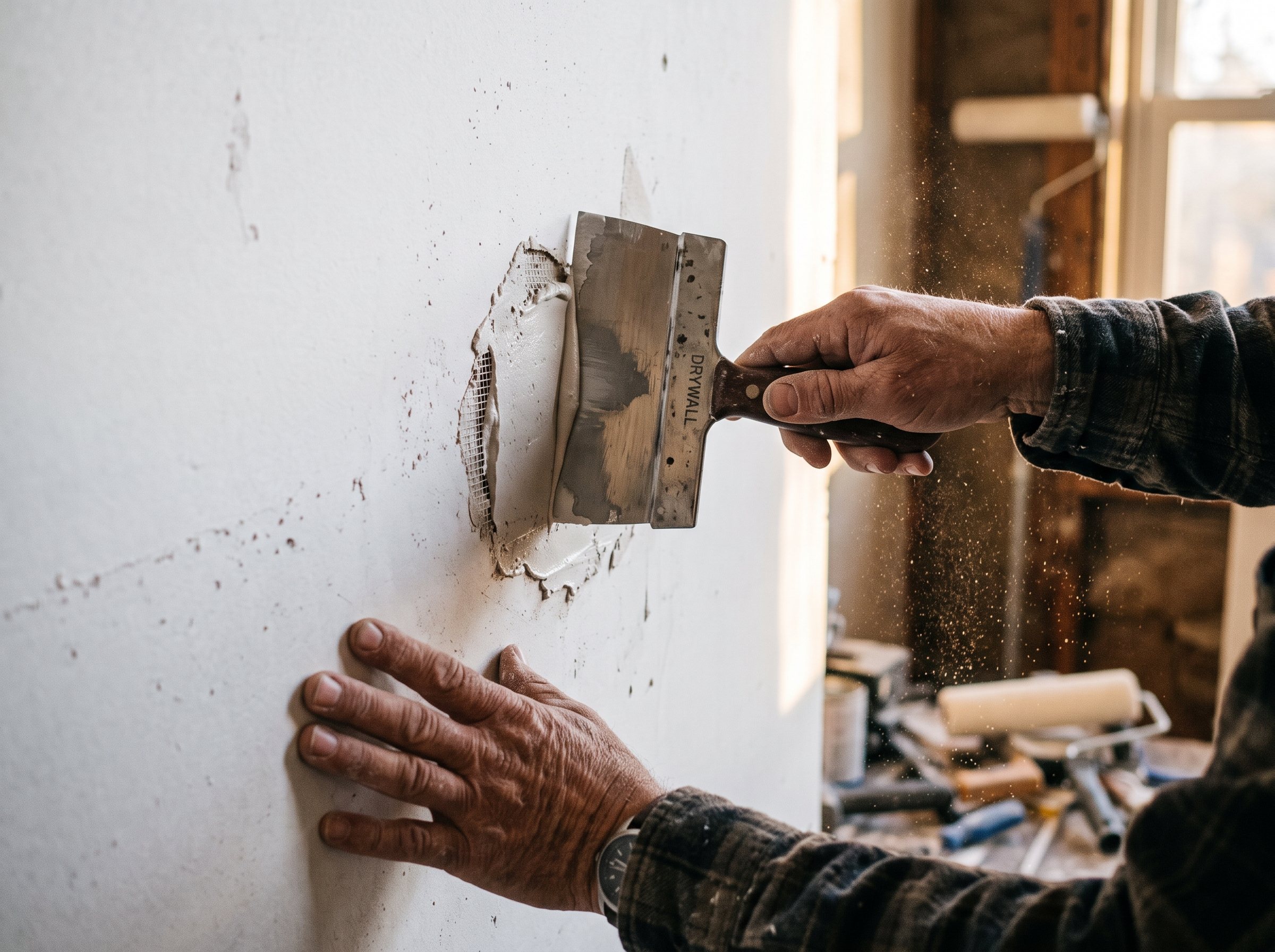
Drywall repair in a Las Vegas home: a taping knife spreading joint compound over a mesh patch on a white wall

Drywall repairin Las Vegas.

Holes, cracks, water damage and bad patches. Textured to match your wall so the repair disappears after paint.

Get your price in 60 seconds

Pick a job. We text you a flat quote.

What do you need?
5.0 from 67 reviewsYour number stays with us
5.0 ★67 Google reviews
5.0 ★Top Pro on Thumbtack
FaveRecommended on Nextdoor
InsuredEvery job covered

What's included

  • Door-knob and small holes
  • Water-damaged sections
  • Ceiling cracks
  • Texture matching
  • Paint touch-up

Drywall repair in Las Vegas homes

Drywall repair in Las Vegas covers a lot of ground: a doorknob hole in the hallway, a crack running across the ceiling, a water stain below an upstairs bathroom, or a rough patch someone else left behind. The goal is always the same. When the paint dries, nobody should be able to find the spot.

Most Las Vegas homes have textured walls, usually knockdown or orange peel, and many older ceilings still carry popcorn texture. A smooth patch on a textured wall stands out from across the room, so matching the texture matters as much as the patch itself.

The age of the house shapes the job. In 1970s to 1990s homes around Paradise, Spring Valley and older parts of Henderson, walls have often been patched and repainted a few times, and the texture can vary from room to room. Newer builds in Cadence, Inspirada or Skye Canyon tend to have one consistent texture and builder paint, which makes matching simpler.

What sets the price of a drywall patch

Size is the obvious factor, but it is rarely the only one. A doorknob hole and a two-foot section cut out after a leak are different jobs: the first is a patch, the second means new drywall screwed to framing, taped, and finished in several coats.

Texture adds work. Orange peel and knockdown are sprayed on and then blended into the wall around the patch, which takes a practiced hand. Ceilings take longer than walls for the same size hole, since the work is overhead and light from windows shows every flaw.

Paint is the other big variable. If you have leftover paint from the original job, the touch-up can stay small. If not, a patch painted with a close match often shows at an angle, and the honest fix is repainting the wall from corner to corner. The written quote spells out which approach is included.

Access and prep count too: furniture to move, a tall stairwell wall, or a patch behind a toilet or vanity. Several small repairs done in one visit usually cost less per hole than calling for each one separately, so it pays to walk the house and list everything first.

Water damage, cracks and popcorn ceilings

Water-damaged drywall is the one repair that should never start with patching. The source comes first, whether that is a supply line, an overflowing AC drain line, a shower valve, or a roof leak that showed up during a monsoon storm between mid-June and September. Once the leak is fixed, soft or crumbling board is cut out and the framing is left to dry before anything closes up. A stain on board that is dry and still firm can often be sealed with a stain-blocking primer instead.

Cracks are a different story. Hairline cracks at the corners of doors and windows, or along ceiling seams, are common as a house settles. Taping over them with the right joint tape and compound holds far better than filling them with caulk or spackle, which tends to crack again along the same line.

Popcorn ceilings need a word of caution. In older homes, especially those built before the mid-1980s, that texture may contain asbestos, so it should be tested before anyone scrapes or sands it. Patching a small area of popcorn is possible with spray-on texture, though an exact match on an old, yellowed ceiling is hard to promise.

How a drywall repair visit goes

It starts with photos. For most holes and cracks, a few pictures of the damage and one wider shot showing the wall and texture are usually enough for a written flat quote. Bigger water damage jobs usually need someone to look in person, since the damage often runs further than the stain.

On the day, we cover the floor, mask off nearby trim and furniture, and cut the damaged area back to clean, solid edges. The patch goes in, gets taped and coated, and is sanded smooth. Then the texture is applied, left to dry, and primed, so the new paint does not leave a dull or shiny spot (called flashing) over the repair.

Small patches with quick-setting compound can often be finished in a single visit. Larger sections need drying time between coats, so plan on a return trip. When we leave, the dust is cleaned up and the area is ready to live in, or ready for the painter if you are repainting the whole room.

Drywall repair questions.

Is it better to patch a doorknob hole or replace the whole sheet?

A doorknob hole is almost always a patch. The damaged area is cut square, a new piece of drywall is set in with backing, and the seams are taped, textured and painted. Replacing a full sheet only makes sense when the damage is spread out, the board is soft from water, or earlier patches have left the wall lumpy. A door stop or wall bumper keeps it from happening again.

Can new texture really match an older knockdown or orange peel wall?

In most cases, yes, closely enough that it disappears once painted. Orange peel and knockdown are sprayed and adjusted, usually after a test on scrap board, until the pattern and size match the wall around it. Walls that were hand-textured or patched many times over the years are harder, and on those we may suggest retexturing a larger area so the transition is not visible.

Does a ceiling stain from an AC leak always mean new drywall?

Not always. If the drywall is dry, firm and not sagging, the stain can usually be sealed with a stain-blocking primer and the ceiling repainted. If it feels soft, bulges, or the tape has let go, that section gets cut out and replaced. Either way, the drain line or leak has to be fixed first, or the stain will come back.

What causes nail pops, and are they worth fixing?

Nail pops are small round bumps where a drywall nail or screw has backed out, often in newer homes as framing lumber dries and shifts. The fix is to drive a screw next to it to pull the board tight, set the old fastener, then skim, texture and touch up. Several can be handled on the same visit as other patches.

Tell us
what's broken.