Las Vegas
Handyman Co.
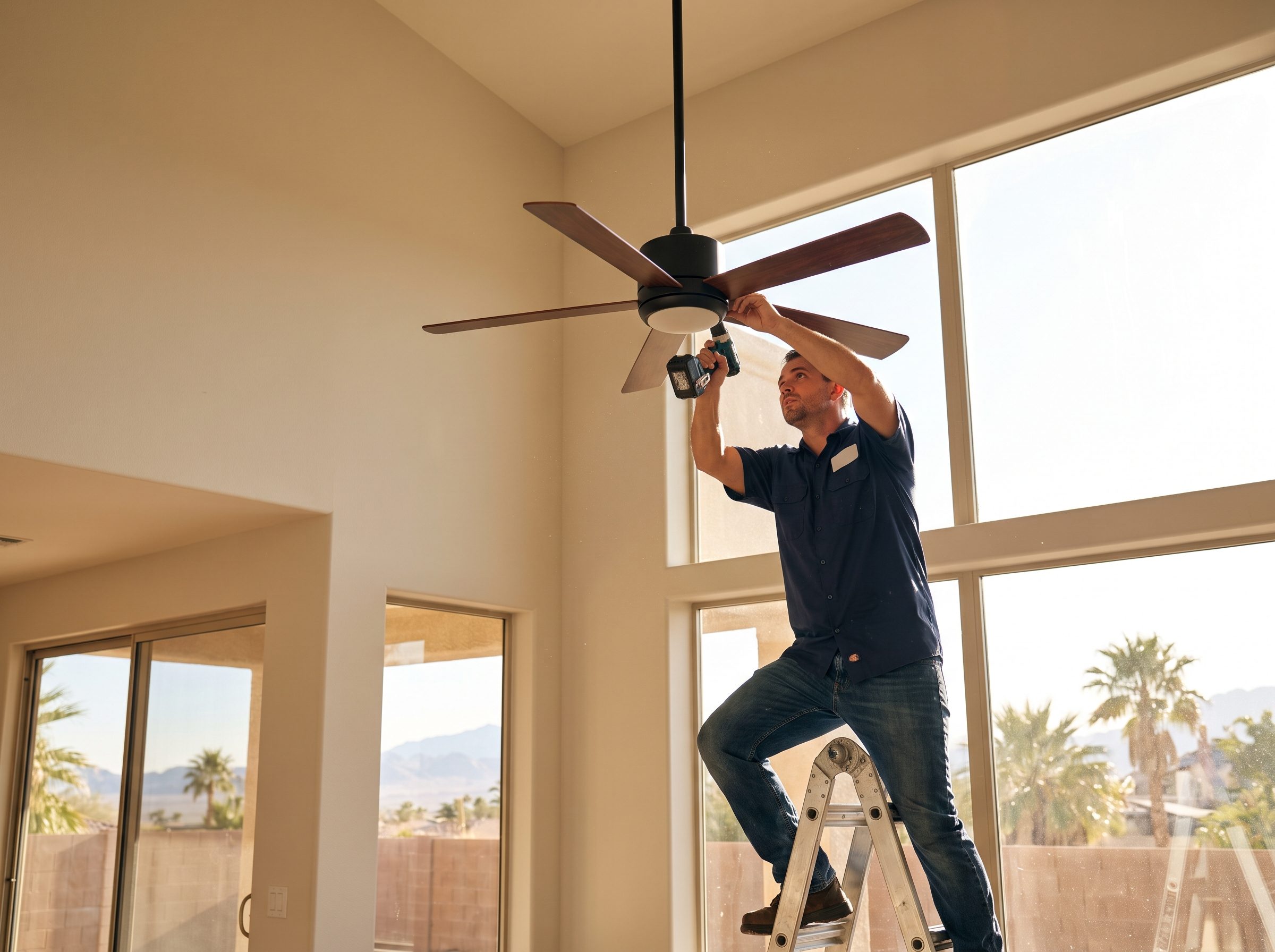
Handyman adjusting a ceiling fan under a vaulted ceiling in a Las Vegas home, with palm trees, a block wall and mountains outside the windows
All guides

Las Vegas home maintenance checklist: what to do each season

March 10, 2026 / 5 min read

Why Las Vegas homes need their own maintenance calendar

Most home maintenance checklists are written for places with snowy winters and rainy springs. This Las Vegas home maintenance checklist follows the seasons the valley actually has: summer highs above 110°F, a monsoon season that brings sudden storms and dust, and the occasional winter night cold enough to freeze exposed pipes.

There is a built-in reminder, too. The Southern Nevada Water Authority changes the landscape watering schedule four times a year, so every time you reset the irrigation clock, it is a good moment to walk the house with this list.

Each season below lists what to check, what most homeowners can handle, and where it makes sense to bring in help.

Spring (March and April): get ahead of the heat

Schedule an air conditioning tune-up with an HVAC company before the first really hot week, rather than finding a problem in July. Replace the air filter and clear dust and debris from around the outdoor unit so it has room to breathe.

Set ceiling fans to spin counterclockwise, which ENERGY STAR recommends for summer, so they push air down and create a cooling breeze. Fans cool people, not rooms, so turning them off in empty rooms saves energy. A fan that wobbles or clicks at speed usually needs balancing or tightening.

Walk the outside of the house and look at the caulk around windows, doors and anywhere a pipe or wire passes through the stucco. Sun-baked caulk shrinks, cracks and pulls away, and those gaps let in hot air now and water once monsoon storms arrive. Check door weatherstripping and sweeps the same day: light showing around a closed exterior door means a gap.

Finally, run each sprinkler zone and watch where the water lands. Heads that spray stucco or block walls leave white mineral stains and keep the base of the wall wet, so adjust them to hit plants, not the house. Spring watering is limited to three assigned days a week under the SNWA schedule.

Summer (May to August): heat, dust and monsoon prep

The summer watering schedule runs May 1 through August 31, and the water authority prohibits landscape irrigation between 11 a.m. and 7 p.m. and on Sundays. Reset the clock early in May so the first hot week does not come with dead plants.

Inside, check the air filter monthly, since the system runs almost nonstop. Find the AC condensate drain line (usually a small pipe that ends outside near the foundation) and make sure the end is not buried in gravel or blocked by plants. A clogged line can back up and stain the ceiling or wall below.

Before July, finish the monsoon checks: fresh caulk where the spring walk-around found gaps, clear roof drains and gutters if the house has them, and yard drains free of gravel and leaves. Clark County lists July through September as flash flood season, so June is the window to get it done.

The garage deserves a look too. It gets extremely hot in summer, so move paint, aerosol cans and anything with a storage temperature warning to a cooler spot indoors.

Fall (September and October): fix what summer broke

Fall is repair season. Once storms pass, look up at every ceiling for new water stains, especially below bathrooms, the AC unit and the roofline. Check the stucco for new cracks and the south and west walls for paint that has faded or turned chalky, since those sides take the most sun.

Cooler weather also opens a good window for exterior painting and outdoor caulking, because paint and sealants have temperature ranges on the label and summer walls in direct sun run far hotter than the air. If you live in an HOA community such as Summerlin, Anthem, Green Valley Ranch, Inspirada or Cadence, submit any color change for approval before booking the work.

Reset the irrigation clock to the fall schedule, three assigned days a week from September 1 through October 31. As nights cool, switch ceiling fans to clockwise on low, the winter setting ENERGY STAR recommends, to circulate warm air that collects near the ceiling. Test smoke alarms and replace batteries where needed; the U.S. Fire Administration recommends testing every alarm once a month.

Winter (November to February): the short list for cold nights

Winters here are mild most of the time, but the National Weather Service does issue freeze and hard freeze warnings for the Las Vegas valley in some years. The parts at risk are the ones outside: exposed pipes, hose bibs, pool equipment, and the backflow preventer on the irrigation line, which holds water inside even when the supply is off.

When a freeze is in the forecast, wrap or cover the backflow preventer and exposed pipes, or shut off and drain the irrigation system at the backflow. Disconnect garden hoses. If a pipe does freeze, never thaw it with an open flame; a hair dryer and patience are safer.

Sprinkler watering drops to one assigned day a week from November through February. Winter is also a good season for indoor projects such as interior painting, drywall patches and regrouting a tired shower. It is a sensible time to flush the water heater too, following its manual, since hard water leaves mineral sediment in the tank.

Year-round checks that take ten minutes

Some checks do not belong to a season. Once a month, open the cabinets under each sink and look for drips, damp wood or white mineral trails, which often show a slow leak before it becomes a swollen cabinet floor. Press the test and reset buttons on GFCI outlets in kitchens, bathrooms, the garage and outside.

A few times a year, close and reopen the shut-off valves under sinks and behind toilets. Valves that sit untouched for years tend to seize, and it is better to find that out on a calm afternoon than during a leak. If one drips at the stem afterward, it is due for replacement.

Smoke alarms themselves should be replaced 10 years from the manufacture date printed on them, according to the U.S. Fire Administration. Keep a simple log on your phone: the date of each filter change, the smoke alarm tests and anything you noticed. When something does fail, that record makes it much easier to see how long it has been going on.

What to handle yourself and what to hand off

Most of this list is homeowner work: filters, irrigation clocks, fan direction, looking under sinks, wrapping the backflow preventer. AC tune-ups and roof repairs belong with HVAC and roofing specialists. In between sits a band of jobs that need tools, a ladder or practice to do well, like exterior caulking on a two-story house, regrouting, drywall repair after a leak, replacing a stuck shut-off valve or swapping a wobbly ceiling fan.

If your walk-around turns up a list like that, group it into one visit. Send photos of each item and we will put together a written flat quote before any work starts.

Quick answers.

When is the best time to paint the outside of a Las Vegas house?

Spring and fall are the easiest seasons. Exterior paint and caulk list a temperature range on the label, and in summer a stucco wall in full sun can run well above the air temperature, which makes paint dry too fast. Cold winter mornings can fall below the range too. If you are in an HOA, get color approval first, since that can take longer than the painting.

Do pipes really freeze in Las Vegas?

Pipes inside a heated house rarely do. The risk is outdoors: above-ground sprinkler lines, hose bibs, pool equipment and the irrigation backflow preventer, which holds water even when the supply is off. The National Weather Service issues freeze and hard freeze warnings for the valley in some winters, and those nights are when to cover, insulate or drain those parts.

How often should the AC filter be changed in a Las Vegas home?

Follow the interval printed on the filter or in the system manual, then adjust to your house. In summer the system runs for long stretches, and homes with pets, nearby construction or frequent dust storms load filters faster. Checking it monthly and holding it up to the light is the simplest guide: if light barely passes through, replace it.

More guides

Tell us
what's broken.