Las Vegas
Handyman Co.
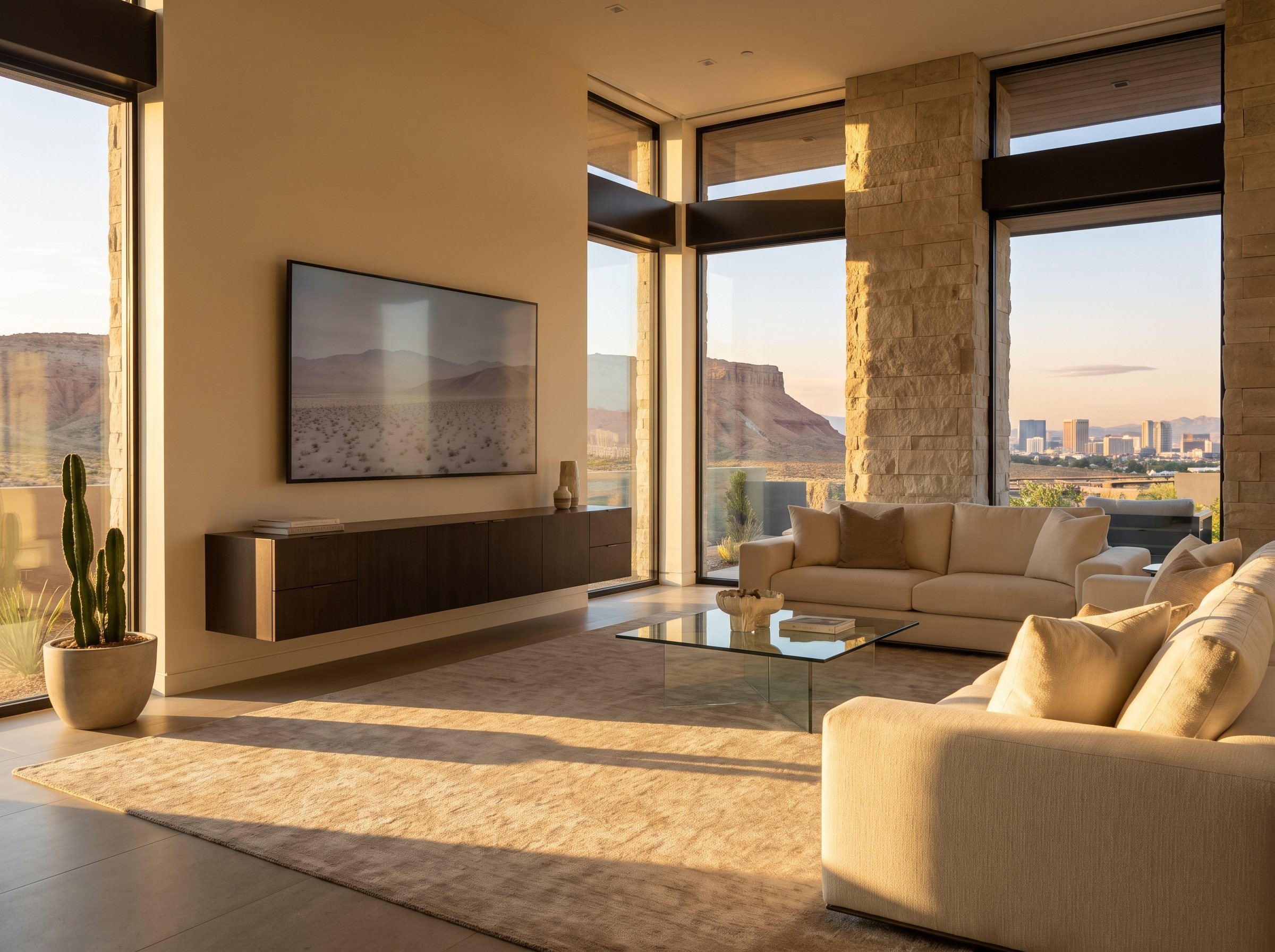
Large flat-screen TV mounted on a living room wall above a floating console, with desert mountains and the Las Vegas skyline through the windows

TV mountingin Las Vegas.

TVs mounted level into studs, cables hidden in the wall, soundbars and shelves lined up. Drywall, brick and stone.

Get your price in 60 seconds

Pick a job. We text you a flat quote.

What do you need?
5.0 from 67 reviewsYour number stays with us
5.0 ★67 Google reviews
5.0 ★Top Pro on Thumbtack
FaveRecommended on Nextdoor
InsuredEvery job covered

What's included

  • Fixed, tilt and full-motion mounts
  • In-wall cable concealment
  • Soundbar mounting
  • Over-fireplace installs

What TV mounting in Las Vegas homes involves

Most TV mounting in Las Vegas comes down to three things: finding solid framing, picking the right mount, and deciding what to do with the cables. We bolt the mount into wood studs, check it with a level, and hang the TV so it sits straight and at a comfortable height for the seat you use most.

Not every wall cooperates. Studs are sometimes off-center from where you want the screen, and a few walls have metal framing or blocking in odd spots. In those cases we use a mount with a wider wall plate or anchors rated for the load, and we tell you before drilling if the spot you picked will not hold the weight.

Fixed mounts keep the TV close to the wall. Tilt mounts help with glare from bright windows, which matters in west-facing rooms that get hard afternoon sun. Full-motion arms let you swing the screen toward a kitchen or a second seating area, but they need the strongest attachment because the arm multiplies the load on the wall.

For height, a good starting point is the middle of the screen near eye level when you are seated. We mark the outline with painter's tape first so you can see it on the wall before anything is drilled.

Hiding the cords: in-wall kits, raceways and soundbars

Hidden cables are the part people notice most. A standard TV power cord is not rated to run inside a wall, so for a clean in-wall setup we install a recessed power kit: an outlet behind the TV, wired with in-wall rated cable to an inlet near the baseboard. HDMI and speaker cables run through the same path.

Some walls make in-wall routing hard: horizontal blocking between the studs, an exterior wall full of insulation, or a masonry fireplace surround. In those spots a paintable cord cover run along the wall is the practical answer. Painted to match, it looks tidy and costs less than opening and patching drywall.

Soundbars get mounted on their own bracket or on an attachment under the TV mount, centered on the screen. If you plan to add a soundbar, shelf or streaming box later, tell us at the start so we leave room and run an extra cable while the wall is open.

Brick, stone and over-fireplace installs

Mounting on brick or stone takes masonry bits and anchors set into solid masonry rather than the mortar joints. We check the surface first, because a thin stone veneer over a framed wall cannot carry a TV the way solid brick can, and the anchors may need to reach the framing behind it.

Over a fireplace, two questions come first. Is the screen too high for comfortable viewing, and does the fireplace send heat up the wall? A pull-down mount handles the height problem. For heat, we look at the mantel and the TV maker's guidance, and if the wall runs hot when the fire is on, we will say so.

Many people want a TV on the covered patio, but summer highs above 110°F are hard on electronics. An outdoor-rated TV and a weather-resistant mount hold up better out there. Mounting to stucco means locating the framing behind it and sealing every hole so monsoon rain stays out of the wall.

What affects the price of mounting a TV

The quote depends on screen size and weight, the type of mount, and the wall. Drywall over wood studs is the simplest job. Brick, stone, tile and fireplace walls take more time and different hardware.

Cable work is the other big factor. A cord cover, an in-wall power kit, and a new outlet each add a different amount of work. Taking down an old mount and patching the holes adds to the job, so mention it up front. If you have more than one TV to hang, put them all in one request so the quote covers everything at once.

Most TV jobs can be quoted from photos. Send a picture of the wall, the TV model or size, and where your outlet and cable box sit, and we will send back a written flat quote. You know the price before anyone drills a hole, and we clean up the drywall dust before we leave.

TV mounting questions.

How big a TV can you mount on a drywall wall?

Size alone is rarely the limit. What matters is the TV's weight, the mount's weight rating and where the studs fall. A large screen bolted into two wood studs with a properly rated mount is a routine job. For very large or heavy screens we confirm the numbers before quoting and may suggest a sturdier mount.

Do I need to be home, and should the TV already be unboxed?

Someone should be home to confirm the height and placement before we drill. You do not need to unbox the TV; we can do that, attach the bracket to the back, and check that the ports are still easy to reach once it is on the wall. Having the remote and any streaming devices handy lets us test everything before we go.

Can you move a TV and patch the old mount holes?

Yes. Moving a TV to another room is common after a remodel or a furniture change. We take down the old mount, patch the lag bolt holes and any cable openings, and texture the patch to match the wall. Touch-up is easiest if you still have leftover paint from the original wall color.

Can you mount a TV in a corner or above a bedroom dresser?

Yes. Corner installs use a full-motion arm or a dedicated corner mount so the screen faces the room instead of the wall. Because corner studs are close together or hidden behind extra framing, we check the layout first. Over a dresser, we set the height from the bed, not the floor, so viewing is comfortable lying down.

Tell us
what's broken.