Las Vegas
Handyman Co.
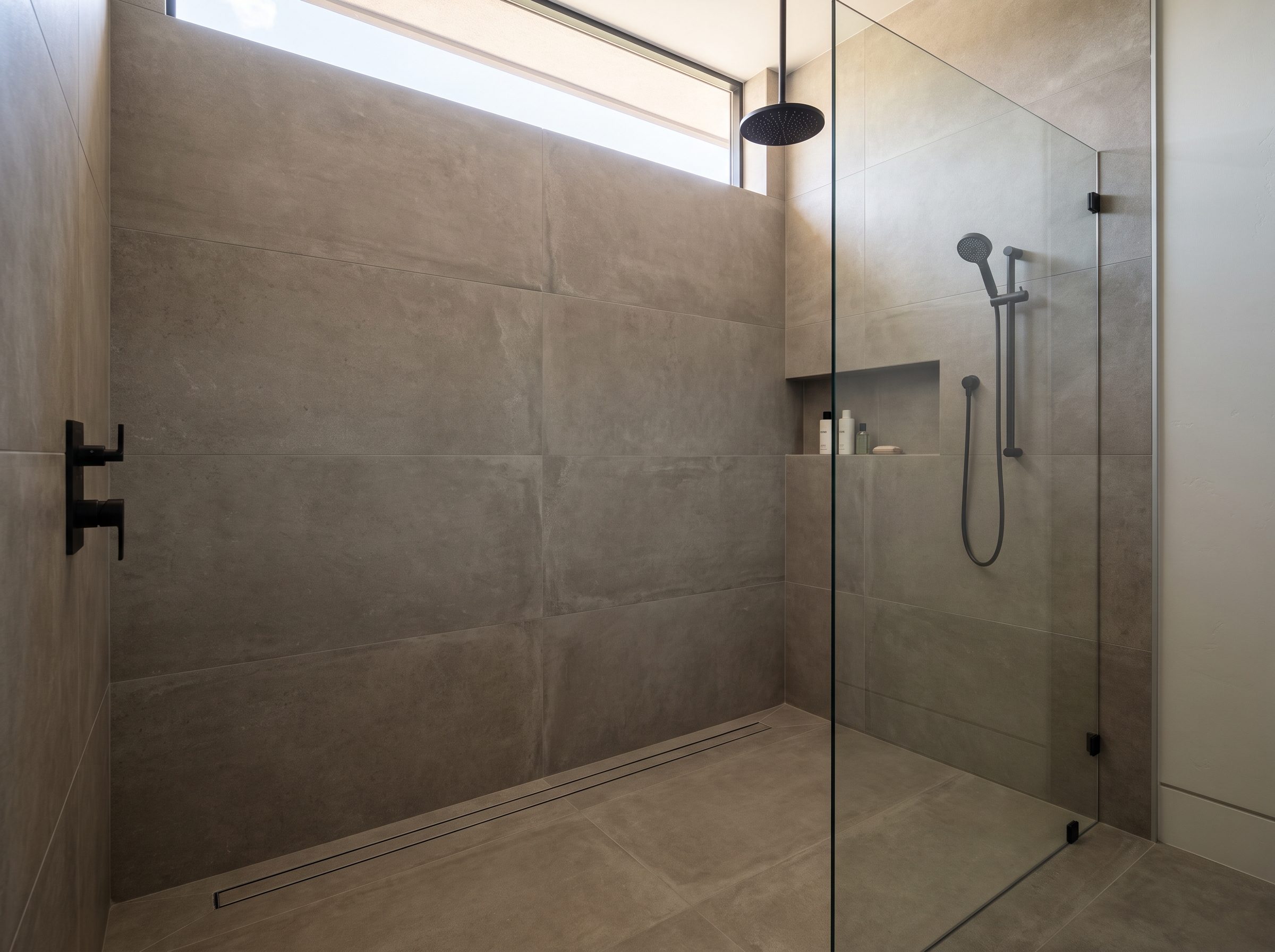
Walk-in shower in a Las Vegas home with frameless glass, large gray porcelain tile and black fixtures, the surfaces where hard water shows first
All guides

Hard water in Las Vegas: what it does to faucets, glass and grout

July 14, 2026 / 5 min read

How hard is Las Vegas water, in numbers?

Hard water in Las Vegas is not a sales pitch from water softener companies. It is on the record. The Las Vegas Valley Water District lists the hardness of its water at 291 parts per million, or about 17 grains per gallon, and classifies it as very hard. The U.S. Geological Survey scale puts anything above 180 milligrams per liter (about the same as parts per million) in the very hard category, so Las Vegas water is well past that line.

Two minerals cause it: calcium and magnesium. They are carried into Lake Mead by the Colorado River, which the water district describes as mineral-dense. Older articles and other local utilities quote slightly different numbers, such as 16 or 18 grains per gallon, and all of them land in the very hard range.

The district is clear that these minerals are not a health risk. The trouble is what they leave behind. Scale forms where water evaporates, and in a climate this dry, bathroom surfaces get wet and dry out over and over. That is why Las Vegas water hardness shows up first on faucets, shower glass and grout.

What mineral scale does to faucets and fixtures

Faucets take the first hit. White crust builds up around the spout, the aerator screen clogs so the stream sputters or sprays sideways, and handles get stiff. Inside the faucet, scale collects on the cartridge (the part that controls flow and temperature), which is often why an older faucet starts to drip or will not shut off cleanly.

Shower heads lose spray holes one at a time until the water comes out in a few hard jets. Toilet fill valves and flappers stick or wear early, which leads to a toilet that runs or refills on its own. The same scale forms inside water heaters and dishwashers, where nobody sees it until performance drops.

Finish choice makes a difference you notice every day. Polished chrome shows every dried drop, while brushed and satin finishes hide spots better between cleanings. Some matte and coated finishes are easily damaged by abrasive pads and strong acid cleaners, so check the care instructions from the manufacturer before scrubbing.

Why shower glass turns cloudy, and when it is too late

Shower glass shows hard water faster than any other surface in the house. Every shower leaves drops behind, the water evaporates, and a thin layer of minerals stays on the glass. A few weeks of that turns clear glass cloudy.

At first the film only sits on the surface, and a cleaner made for mineral deposits will lift it. Left for months or years, the minerals can etch the glass itself. Etched glass stays hazy no matter how it is cleaned, and the choices come down to living with it or replacing the panel.

The best defense is simple: squeegee the glass after every shower. The water district makes the same point, noting that deposits only form when water is left to evaporate. If the glass is being replaced anyway, frameless panels with fewer metal edges are easier to wipe down, and many glass suppliers offer a factory-applied coating that helps water bead and run off.

Grout and caulk: where scale does quiet damage

Cement grout is porous, so it soaks up water and the minerals in it. Over time, light grout turns chalky or gray, dark grout picks up a white haze, and scale traps soap residue that gives mildew something to feed on in the corners.

The instinct is to reach for the strongest cleaner under the sink. Strong acids do remove scale, but they also eat into cement grout and can etch natural stone like marble and travertine. Over time the grout lines turn sandy and sit lower than the tile, and water gets into them even faster.

Sealing cement grout once it has fully cured slows how much water and mineral it absorbs, which makes scale easier to wipe away. Check the caulk at the same time, where the tub meets the tile and in the inside corners. Caulk that is cracked, peeling or stained black needs to come out completely and be replaced, not covered with a fresh bead on top.

A cleaning routine for hard water in Las Vegas

Daily: squeegee or towel off the shower glass and tile walls, and wipe faucets dry after heavy use. It takes about a minute and prevents most buildup before it starts.

Weekly: clean showers, tubs and sinks with a mild cleaner suited to your surfaces, before the film has time to harden into scale.

Every few months: unscrew the faucet aerators and soak them in white vinegar to loosen the scale, then rinse and reinstall. Many shower heads can be soaked the same way, either removed or in a bag tied over the head. Check the finish first, since some coatings do not tolerate vinegar.

Once a year: look over every grout line and caulk joint. Sprinkle a few drops of water on the grout; sealed grout beads it for a moment, while unsealed grout darkens right away. This is also a good time to flush the water heater, following the steps in its manual.

Water softener, filter or just a better routine?

A whole-house water softener is the only option here that changes the water itself. It exchanges calcium and magnesium for sodium or potassium, so much less scale forms on glass, on fixtures and inside appliances. The water district lists household softeners among its suggestions for hard water. A softener needs a spot near the main water line, a drain, an outlet, regular salt and a hardness setting that matches your water.

Filters are a different tool. A pitcher or basic under-sink filter can improve taste, but most do not remove hardness, so they will not stop spots in the shower. A reverse osmosis system at the kitchen sink removes most minerals, but only for the water from that one faucet.

Without a softener, the routine above still keeps most surfaces in good shape. Focus on the spots that stay wet longest: the shower floor, the base of the faucet and the bottom track of a shower door.

When hard water damage needs a repair

Most hard water care is DIY: wiping, soaking aerators and choosing the right cleaner. It turns into a repair when scale has already caused damage. A dripping faucet or a toilet that keeps running usually needs a new cartridge, fill valve or flapper, which is routine plumbing repair.

Grout that is crumbling, missing or stained past cleaning needs regrouting, and failed caulk needs to be cut out and redone. If the glass is etched, the grout is failing across the whole shower and the fixtures are crusted inside and out, a shower remodel with finishes picked for hard water may make more sense than patching each problem.

Not sure which one you are looking at? Send a few photos of the worst spots, and we can tell you whether it is a cleaning job, a repair or a bigger project, with a written flat quote before any work starts.

Quick answers.

Is hard Las Vegas tap water safe to drink?

Yes. The Las Vegas Valley Water District describes calcium and magnesium, the minerals that make the water hard, as nontoxic and says they do not pose a health risk. The effects are cosmetic and mechanical: spots, scale and extra wear on fixtures and appliances. Taste is a separate matter, and many households use a filter or reverse osmosis at the kitchen sink for drinking water.

What does 17 grains per gallon actually mean?

Grains per gallon is an older unit for hardness that water softener makers still use. One grain per gallon equals about 17.1 parts per million, so the water district's figure of 291 parts per million works out to about 17 grains. If you install a softener, that is the number its hardness setting usually asks for, following the manufacturer's instructions.

Why does shower glass stay cloudy even after a good cleaning?

If a mineral cleaner and a soft cloth leave the glass looking the same, the deposits have probably etched the surface. Etching is damage to the glass itself, not a film sitting on it, so no cleaner will bring back full clarity. Squeegeeing after every shower keeps it from getting worse, and replacement is the only real fix for heavily etched panels.

Do white crusty spots mean a faucet needs replacing?

Not usually. Crust on the outside is cosmetic and comes off with the right cleaner. What matters is how the faucet works. A steady drip, a stiff handle or water that will not fully shut off points to a worn or scaled cartridge inside, and replacing the cartridge often fixes it. The whole faucet only needs to go when parts are unavailable or the body itself leaks.

More guides

Tell us
what's broken.