Las Vegas
Handyman Co.
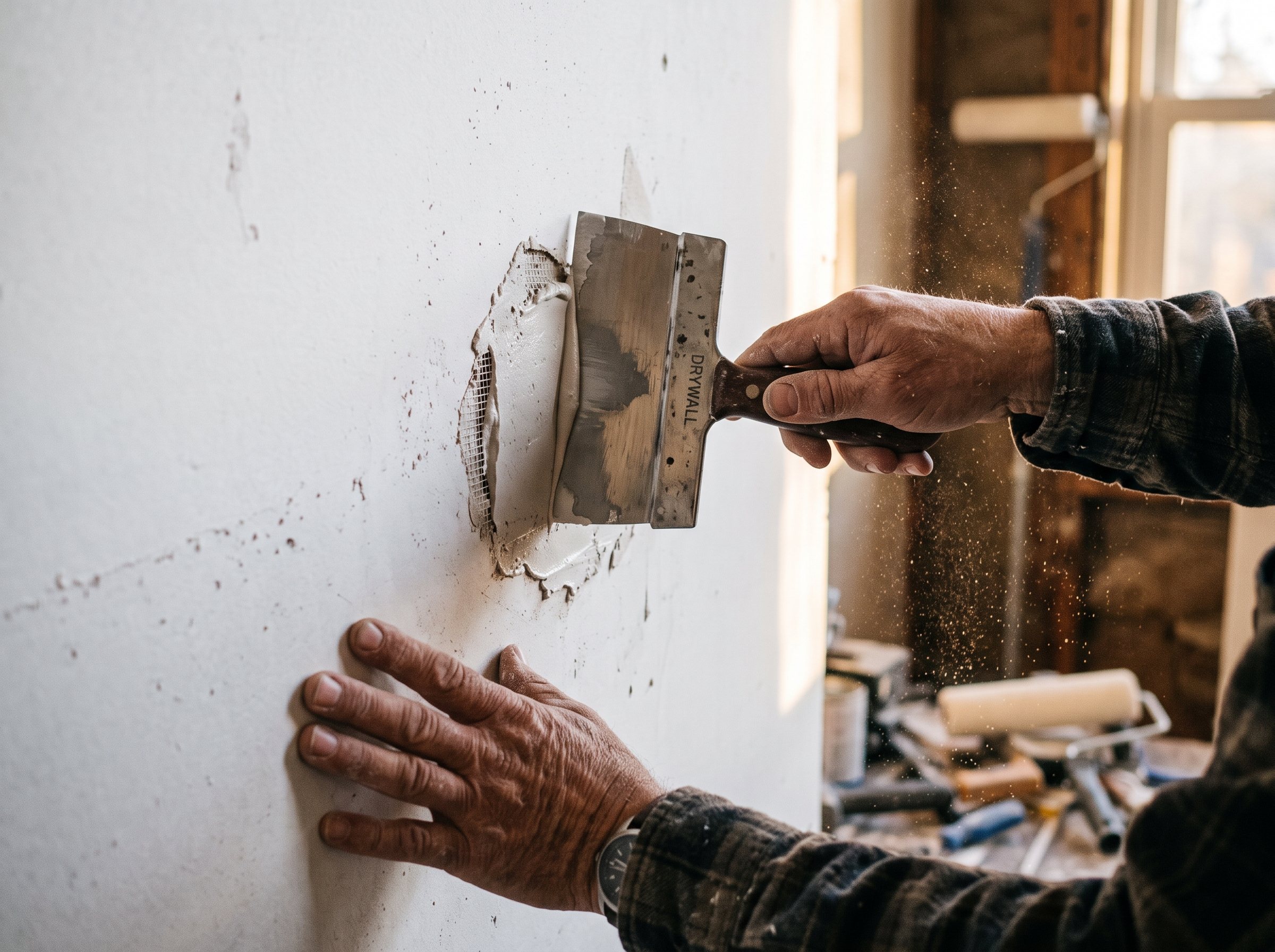
Taping knife spreading joint compound over a mesh patch on a white wall during a drywall repair
All guides

What drives drywall repair cost, from nail pops to water damage

January 20, 2026 / 5 min read

Why drywall repair cost varies from one hole to the next

Drywall repair cost is hard to guess from the size of the hole alone, because the hole is only part of the job. Two patches the same size can take very different amounts of time depending on where they are, what texture sits around them, whether water was involved, and how the wall will be painted afterward.

Most of the price comes from labor and the number of trips. Joint compound needs time to dry between coats, texture needs to dry before primer, and primer needs to dry before paint. A small patch with quick-setting compound can often be finished in one visit, while a larger repair usually means coming back.

This guide walks through the factors that move the number, so the quote makes sense when it arrives and you know what to ask about.

Size and type of damage

Size sets the method. Screw holes and nail pops are filled or reset, not patched. A doorknob hole or a fist-sized hole usually gets a mesh patch or a cut-in piece of drywall with backing behind it. Anything larger, or damage that runs across a stud, means cutting back to the framing and screwing in new board.

A new piece of drywall has to be taped at every seam, then coated several times so the edges feather out and do not show as a raised square. That is why a hole twice as wide is often much more than twice the work.

Count matters too. Several small repairs handled in one visit usually cost less per hole than separate calls, because setup, drying time and cleanup are shared. Before asking for a quote, walk the house and note every ding, crack and old anchor hole you want fixed.

Where the damage is: ceilings, stairwells and tight spots

Location can matter as much as size. Ceiling repairs take longer than wall repairs of the same size, since the work is overhead, compound fights gravity, and light from windows shows every ridge. A patch high on a two-story stairwell or entry wall needs a tall ladder or scaffold, which adds setup time.

Tight spots slow things down as well. Damage behind a toilet, beside a vanity, around an outlet box or along a tile edge means working around fixtures and protecting finished surfaces. A dented outside corner needs new corner bead before the wall can be finished.

One wall deserves special mention: the drywall between an attached garage and the living space. It is part of a fire separation, so holes there should be repaired with drywall and taped properly, not covered with a plate or left open.

Texture matching and why it takes skill

Many homes in the valley have textured walls rather than smooth ones. Orange peel, knockdown and skip trowel are the common finishes, and ceilings in older homes may still have popcorn texture. A smooth patch on a textured wall shows from across the room, especially when low sun hits the wall at an angle.

Matching is part craft, part trial and error. Orange peel and knockdown are usually sprayed, and the nozzle, the thickness of the mix and, for knockdown, the timing of the knife pass all change the result. Heavier textures take longer to blend, and a wall that has been patched by several people over the years may need a wider area retextured so the repair does not show as a patch within a patch.

Popcorn ceilings add a separate step. Texture applied before the mid-1980s may contain asbestos, and it cannot be identified by looking at it, so it should be tested before anyone cuts, scrapes or sands it. Testing adds a little time up front, but it is the only safe way to start.

Water damage: the leak gets fixed first

Water-damaged drywall is priced differently because the visible stain is rarely the whole story. Water travels along framing and wicks up and sideways through the board, so the damaged area inside the wall or ceiling is often larger than the mark on the surface.

The source has to be found and fixed before any patching. Common culprits include a supply line under a sink, a shower valve, a clogged air conditioner drain line, or a roof leak that shows up after a monsoon storm. If the leak is plumbing, a plumbing repair comes first; patching over an active leak just means paying for the same repair twice.

Board that is soft, crumbling or sagging gets cut out so the framing can dry, and wet insulation behind it may need to come out too. Board that stayed firm and only shows a stain can often be sealed with a stain-blocking primer instead of replaced. That difference is one of the biggest swings in a water damage quote, and it is why these jobs are usually looked at in person.

Paint: the part of the repair people forget to budget for

A perfect patch still shows if the paint does not match. Fresh compound and texture soak up paint differently than the old wall, so the repair gets primed first. Without primer, the spot can look dull or shiny next to the rest of the wall, an effect called flashing.

The bigger question is touch-up versus repaint. If there is leftover paint from the original job and the wall has not faded much, a small touch-up can work. If the color is unknown, or the paint has aged in the sun, even a close color match tends to show at an angle, and the reliable fix is repainting the wall from corner to corner.

Sheen matters too. A patch painted in eggshell on a flat wall will catch the light. Look in the garage for leftover paint cans and note the color name and sheen before asking for a quote, and say whether you want the repair left ready for paint or fully painted. If several walls need work, it may make sense to fold the repairs into an interior painting job.

How photo quotes work, and when to do it yourself

For most holes and cracks, photos are usually enough for a written flat quote. Send one close-up with a tape measure or a coin in the frame for scale, one wide shot of the whole wall or ceiling so the location and access are clear, and one shot taken at a low angle with a light off to the side, which shows the texture.

Add a short note: what caused the damage, whether any leak has been fixed, whether you have leftover paint, and whether it is one repair or a list. If the job turns out bigger once the wall is opened, a good quote explains how that will be handled before work starts.

Small, dry, smooth-wall repairs are reasonable DIY projects: nail holes, screw holes and a nail pop or two. Ceilings, textured walls, anything larger than a doorknob hole, and anything involving water are where a pro usually saves time and a second attempt.

If you have a hole, crack or stain that needs attention, send a few photos through our drywall repair page. We will reply with a free, written flat quote, and on the day we protect the floors and clean up before we leave.

Quick answers.

Why can a drywall quote change after the wall is opened?

Sometimes the damage behind the surface is bigger than it looked. Wet insulation, a soft section of board beyond the stain, or a leak that is still active only shows up once the damaged piece is cut out. A clear quote says what is included and how any extra work would be handled, so nothing new is added without your okay.

Is it cheaper to leave the repair unpainted and paint it yourself?

It can be, if you have the original paint and are comfortable cutting in a clean edge. Ask for the repair to be left primed and ready for paint, since unprimed compound can cause flashing. Keep in mind that a touch-up on an older, sun-faded wall may still show, and painting the full wall is the safer plan.

Does a small crack in a ceiling mean something is wrong with the house?

Usually not. Hairline cracks along ceiling seams and at the corners of doors and windows are common as framing dries and the house settles. Cracks that keep growing, open wider than a hairline, or come with doors that suddenly stick are worth having checked before they are patched. A stable crack is taped and finished, not just filled.

More guides

Tell us
what's broken.