Las Vegas
Handyman Co.
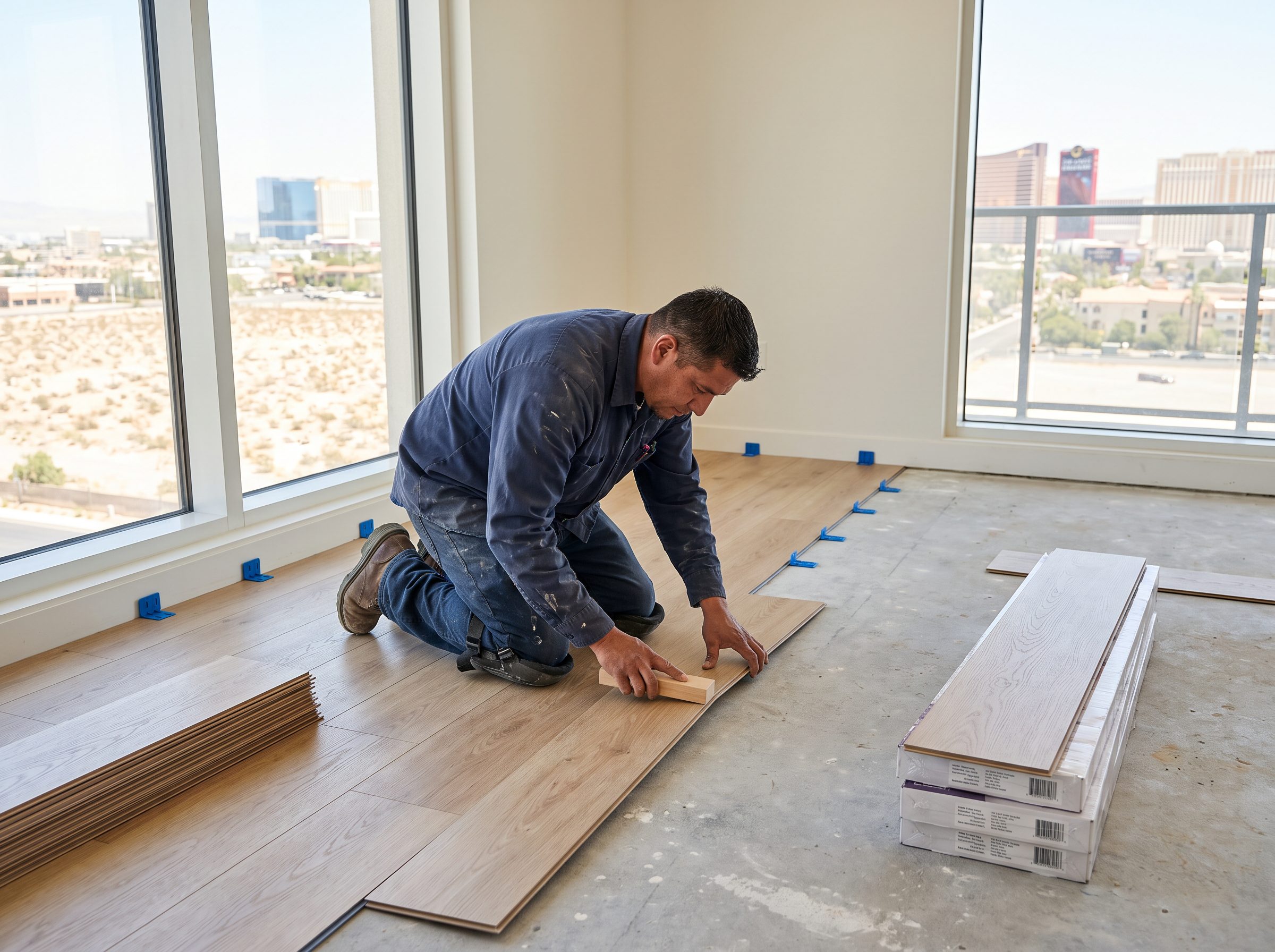
Installer laying wood-look luxury vinyl plank over a concrete subfloor in a sunny Las Vegas room with the Strip visible through the windows
All guides

Best flooring for Las Vegas heat, dust and pets

December 9, 2025 / 5 min read

What Las Vegas does to a floor

Choosing the best flooring for Las Vegas heat, dust and pets comes down to three local stresses. Sun pours through large windows and sliding doors and heats the floor in its path. Fine desert dust gets tracked in every day and acts like sandpaper under shoes and paws. And dogs bring claws, water bowls and the occasional accident.

Under all of it is the slab. Most homes here are built slab-on-grade, so ground-floor flooring goes over concrete. That rules out nothing, but it means the slab has to be flat, clean and dry enough for the product, and it changes how some materials are installed.

Houses that sit closed up in summer with the AC off, such as second homes or rentals between tenants, add one more test: indoor temperatures can climb past the range some products list in their installation instructions.

Porcelain tile: the hardest-wearing option

Porcelain tile is the floor that shrugs off almost everything the desert throws at it. It is dense, very hard to scratch, does not mind heat or direct sun, and water sits on top of it instead of soaking in. Dog claws and tracked-in grit that dull other floors leave little mark on a good porcelain.

Wood-look porcelain planks give the look of hardwood with the same toughness, and tile stays cool underfoot, which many people like in July and fewer like in January. The trade-offs are that tile is hard on dropped dishes and tired legs, and grout lines collect dirt and hard water film unless the grout is sealed or a stain-resistant type.

Installation matters as much as the tile. Slabs often have hairline shrinkage cracks, and tile set straight over one can crack along the same line, so a crack isolation membrane is worth it on many floors. Large-format tile also needs a very flat slab to avoid uneven edges. Tile is the slowest and messiest of these floors to install, and the hardest to remove later.

Luxury vinyl plank: the pet-friendly middle ground

Luxury vinyl plank is a popular choice for pet owners who want a wood look. Its core is waterproof, so water bowls and accidents wipe up without soaking into the planks, and it is quieter and warmer underfoot than tile. It also goes in faster, usually as a floating floor that clicks together over the slab.

Scratch resistance depends largely on the wear layer, the clear top layer that protects the printed design. A thicker wear layer holds up better to claws and grit, and a textured, matte surface hides fine scratches far better than a smooth, shiny one. Compare the wear layer figure on the spec sheet, not just the total plank thickness.

Heat is the catch. Vinyl expands and contracts with temperature, and some manufacturers warn about direct sun through large windows or list a temperature range for the home. Rigid core products, often labeled SPC, tend to be more stable than flexible vinyl, but the rules are in each product's instructions. Proper expansion gaps at the walls, blinds or UV film on sunny glass and a lighter color in sun-soaked rooms all help.

Laminate and engineered wood: where they fit

Laminate has a very hard wear surface, and many lines resist scratches from claws and grit better than vinyl. Look for the abrasion class, called the AC rating, on the box; higher numbers are made for heavier traffic. The weak point is water. Much laminate is water resistant rather than waterproof, and a pet accident or overflowing water bowl left at a seam can swell the edges.

Engineered hardwood is real wood veneer over a stable core, and it is the right pick when only real wood will do. It is more stable than solid hardwood on a slab, but the top layer is still wood, so claws and grit will mark it over time, and very dry air can open small gaps between boards. It suits bedrooms and quieter rooms better than a busy entry or a dog's favorite run to the back door.

Both are often floated over an underlayment with a moisture barrier on concrete, and both need the manufacturer's expansion gaps at walls and doorways.

What about carpet?

Carpet is soft, warm and quiet, which is why it still shows up in bedrooms. In a dusty climate with pets, though, it holds on to what hard floors let you sweep away: fine dust, pet hair and dander work down into the fibers, and accidents soak into the pad below. If you keep carpet, limit it to bedrooms, choose a low, dense pile, and plan on regular vacuuming with a good filter.

Area rugs are a good middle path on tile or plank: they add warmth where you want it and go out for cleaning. Choose a rug pad the flooring maker approves, since some rubber backings can stain vinyl.

Details that matter as much as the material

Stop the dust at the door. A coarse mat outside and a washable mat inside each entry catch much of the grit before it reaches the floor, and that prevents more fine scratches than most people expect. Felt pads under chair and table legs do the same job for furniture.

Color and texture decide how often a floor looks dirty. Mid-tone floors with some grain or pattern hide dust, paw prints and pet hair far better than very dark or very light solid colors, which show every speck in the strong desert light. Matte finishes hide scratches better than high gloss.

Pet doors deserve a look when the floor goes in. A pet door that is poorly sealed lets in dust and hot air right where the new floor starts, so check the flap and weather seal. Finally, keep transitions in mind: running one floor through the main living areas, with tile only in wet rooms if you like, means fewer thresholds to catch dust and trip over.

Choosing flooring room by room

Entry, kitchen and laundry: porcelain tile or a rigid core vinyl plank with a thick wear layer. These rooms see the most grit and water. Living areas: vinyl plank or wood-look porcelain, depending on whether comfort underfoot or maximum toughness matters more. Bathrooms: porcelain or waterproof vinyl plank.

Bedrooms: laminate, engineered wood, vinyl plank or carpet all work, since they see less dust and fewer dirty paws. Rooms with big west-facing windows: tile, or a vinyl plank whose instructions allow direct sun, plus window coverings.

If you are weighing options, we can look at the slab, the sunny rooms and how your pets use the house, then give you a free estimate and a written flat quote before any work starts.

Quick answers.

Can vinyl plank flooring buckle in a Las Vegas summer?

It can, when the floor is installed without enough expansion gap, pinned under heavy cabinets, or exposed to more heat than the product allows, such as intense sun through a slider or a closed-up house with the AC off. Following the manufacturer's gap and temperature rules, using window coverings and keeping the AC on at a moderate setting while away go a long way.

Which floor hides dog nail scratches best?

Porcelain tile is very hard to scratch, and dog nails rarely mark it. Among plank floors, laminate with a high AC rating and vinyl with a thick wear layer hold up best, and a textured, matte, mid-tone surface hides the fine scratches that do happen. Keeping nails trimmed helps too, whatever the floor.

Is tile too slippery for older dogs?

Tile and smooth plank floors can be slippery for older dogs or dogs with joint trouble. A tile with a textured or matte surface gives better grip than a polished one, and runners or rugs along the dog's usual paths help a lot. If slipping is already a problem, vinyl plank is softer and often less slick than polished tile.

More guides

Tell us
what's broken.